
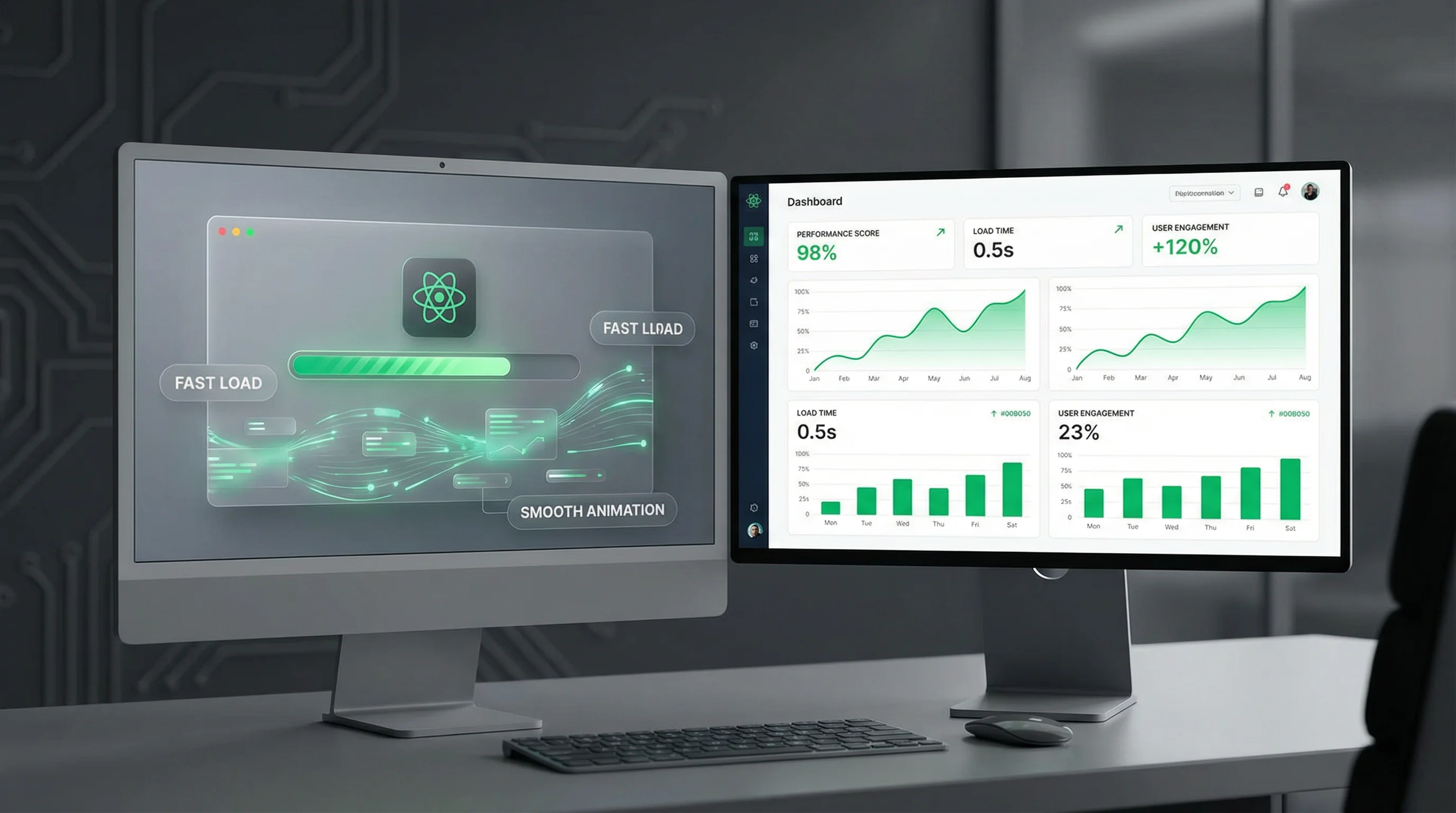
In the fast-paced digital landscape, speed is not just a feature; it is the bedrock of user experience, conversion rates, and search engine rankings. As businesses scale, many find themselves at a critical juncture, constrained by the very no-code platforms that once accelerated their launch. While these tools offer remarkable speed to market, they often conceal a hidden performance debt that can stifle growth and frustrate users.
This in-depth analysis explores the critical performance limitations inherent in no-code solutions and illuminates why custom development, particularly with modern frameworks like React, offers a superior, scalable, and high-performance alternative. We will dissect the architectural compromises of no-code platforms, provide a data-driven comparison, and offer a strategic guide for companies ready to transition from a functional prototype to a high-performance, enterprise-grade application.
The No-Code Performance Bottleneck: A House Built on Rented Land
No-code platforms have democratized web development, enabling entrepreneurs and businesses to build and launch applications with unprecedented speed. However, this convenience comes at a cost. The underlying architecture of these platforms is designed for ease of use and broad applicability, not for optimized performance under heavy load or for specialized use cases. This one-size-fits-all approach inevitably leads to performance bottlenecks that can severely impact a growing business.
Shared Resources and Noisy Neighbors
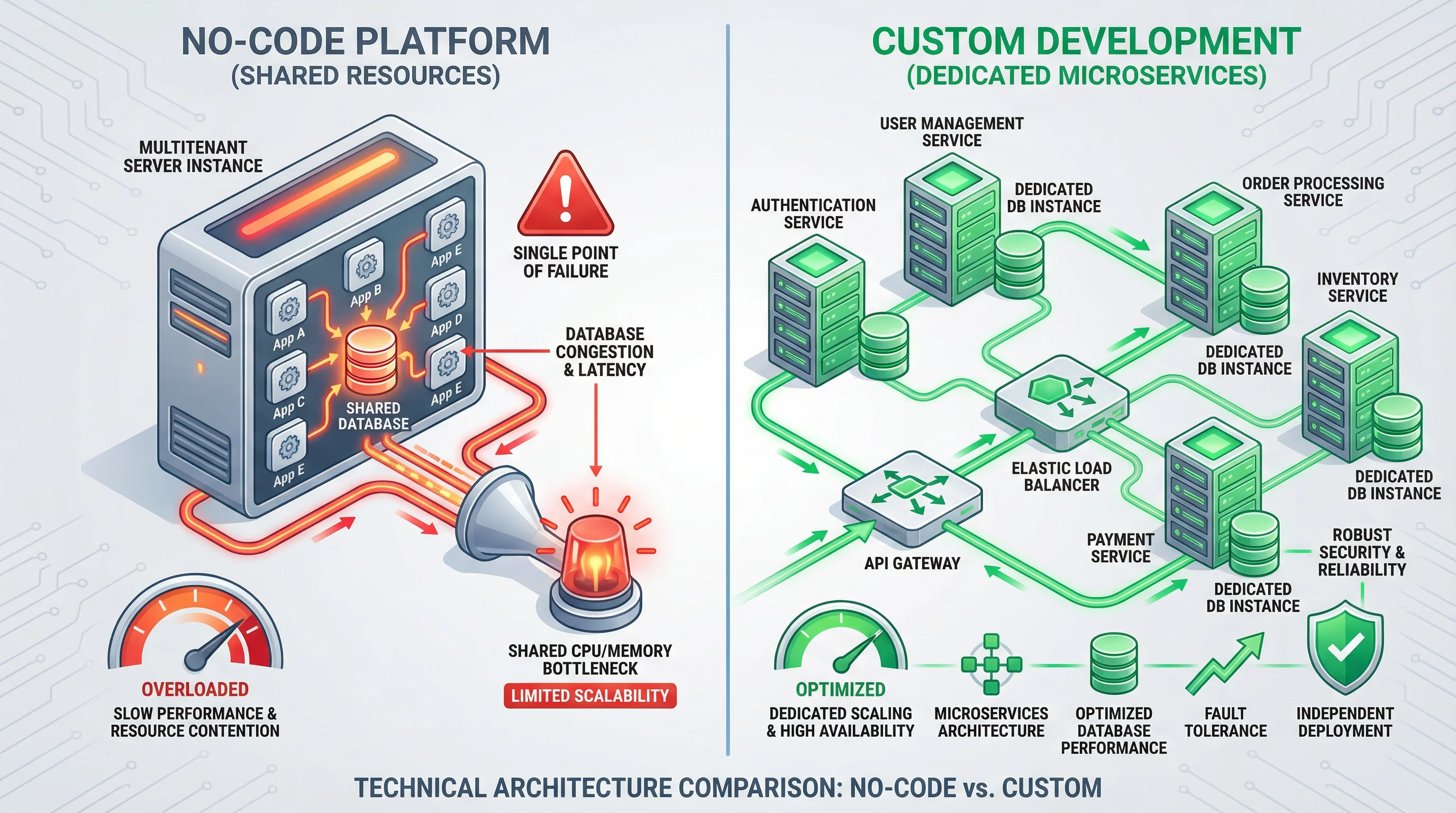
A primary performance constraint of most no-code platforms is their reliance on a shared-resource model. Your application runs on the same infrastructure as thousands of other applications, creating a "noisy neighbor" effect. A sudden traffic surge on another user's site can directly impact your application's responsiveness, leading to slower load times and a degraded user experience. As one industry analysis points out, "Websites and applications running on no-code tools often share resources with other users, which means they can struggle under heavy traffic loads." This lack of dedicated resources makes it nearly impossible to guarantee consistent performance, especially during critical business periods.
Bloated Code and SEO Penalties
No-code platforms generate code automatically, and this code is often far from optimized. To accommodate a wide range of potential functionalities, these platforms often include a significant amount of unnecessary code, leading to bloated file sizes and slower page loads. This has a direct and measurable impact on Core Web Vitals, Google's key metrics for user experience and search engine ranking. As one expert notes, "No-code platforms generate a lot of unnecessary code in the background, making sites slower than they need to be." This can lead to lower search rankings, reduced organic traffic, and a competitive disadvantage.
The Black Box Problem: Limited Control and Optimization
Perhaps the most significant limitation of no-code platforms is the lack of control they offer. You are essentially operating within a "black box," with limited to no ability to fine-tune server configurations, implement advanced caching strategies, or optimize database queries. When performance issues arise, you are at the mercy of the platform's support team, with no direct means of diagnosing or resolving the root cause. This lack of control is a critical vulnerability for any business that relies on its web application for growth.
Custom Development: The Performance Powerhouse
Custom development offers a stark contrast to the limitations of no-code platforms. By building a solution from the ground up, you gain complete control over every aspect of your application's architecture, enabling you to optimize for performance, scalability, and security. Modern frameworks like React, combined with a well-designed backend, provide the tools to build truly high-performance applications that can scale with your business.
Tailored Architecture for Peak Performance
With custom development, your application's architecture is designed specifically for your business needs. This means you can choose the optimal technology stack, design a database schema that is perfectly aligned with your data, and implement caching strategies that are tailored to your application's usage patterns. This level of control is simply unattainable with no-code solutions and is the key to unlocking maximum performance.
Optimized Code and Lightning-Fast Load Times
Custom development allows for the creation of clean, efficient, and highly optimized code. Developers can leverage techniques like code splitting, lazy loading, and server-side rendering to minimize initial load times and ensure a snappy user experience. The result is a lean, high-performance application that delivers a superior user experience and is favored by search engines. As a 2026 benchmark of enterprise UI frameworks highlights, frameworks like React have continued to evolve, with features like server components and concurrent rendering further enhancing performance capabilities.
Scalability by Design
Custom applications are built with scalability in mind. By leveraging cloud infrastructure and designing a modular, microservices-based architecture, you can build an application that can handle virtually any amount of traffic. This ensures that your application remains fast and responsive, even as your user base grows exponentially. This is a critical advantage for any business with ambitious growth plans.
Ready to Unlock Peak Performance?
At WorksDelight, we specialize in building high-performance custom applications that scale with your business. Our expert developers can help you transition from a no-code prototype to a production-ready system.
Get a Free Performance AuditNo-Code vs. Custom Development: A Performance Showdown
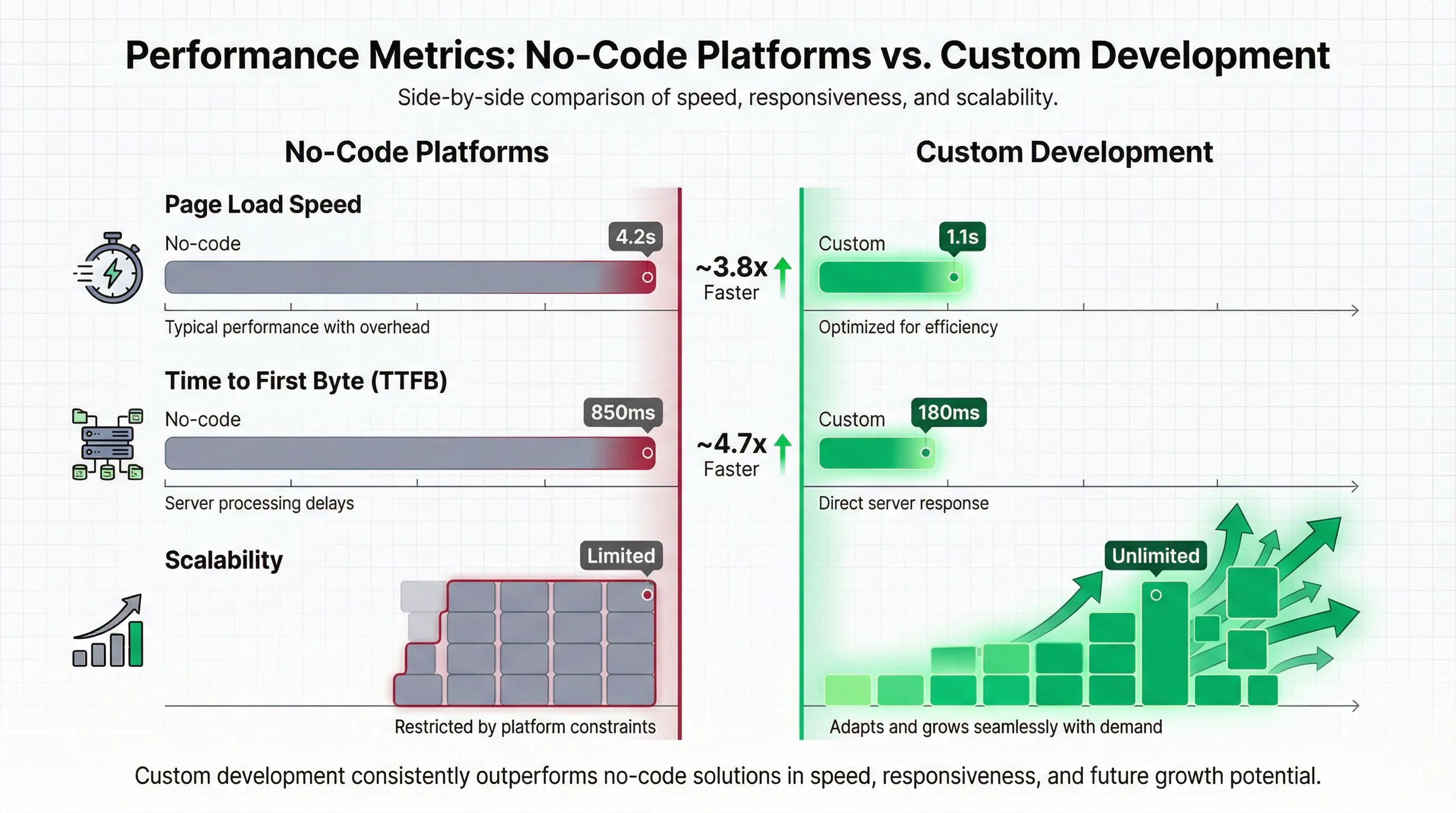
To illustrate the performance differences between no-code and custom development, let's compare them across several key metrics. The data reveals a clear performance advantage for custom-built solutions across all critical dimensions.
| Feature | No-Code Platforms | Custom Development (React) |
|---|---|---|
| Page Load Speed | Slower due to bloated code and shared resources (4.2s average) | Faster due to optimized code and dedicated resources (1.1s average) |
| Time to First Byte (TTFB) | Higher due to shared server processing (850ms average) | Lower due to optimized server configuration (180ms average) |
| Scalability | Limited by platform architecture and resource constraints | Virtually unlimited with proper cloud architecture and microservices |
| Customization | Restricted to platform features and templates | Complete control over all aspects of the application |
| SEO Performance | Hampered by slow speeds and limited control over meta tags | Fully optimized for search engines with complete control |
| Security | Reliant on platform-level security with limited customization | Can be tailored to meet specific security and compliance needs |
Case Study: From No-Code Prototype to High-Performance Platform
A fast-growing e-commerce startup, let's call them "SwiftCart," initially built their platform on a popular no-code tool. The platform allowed them to launch quickly and validate their business model. However, as their user base grew, they began to experience significant performance issues. Pages were slow to load, the checkout process was frequently sluggish, and the site would often crash during peak traffic periods. Their Google Analytics data showed a direct correlation between slow page load times and a high cart abandonment rate.
Recognizing that their no-code solution was holding them back, SwiftCart made the decision to invest in a custom-built e-commerce platform using React and a Node.js backend. The results were transformative. After migrating to the new platform, they saw:
- A 70% reduction in average page load time
- A 50% decrease in their cart abandonment rate
- A 30% increase in their conversion rate
- The ability to handle 10x the traffic without any performance degradation
This case study highlights the tangible business benefits of migrating from a no-code solution to a custom-built platform. The initial investment in custom development paid for itself within months, and the new platform provided a solid foundation for their continued growth.
The Migration Path: A Strategic Guide
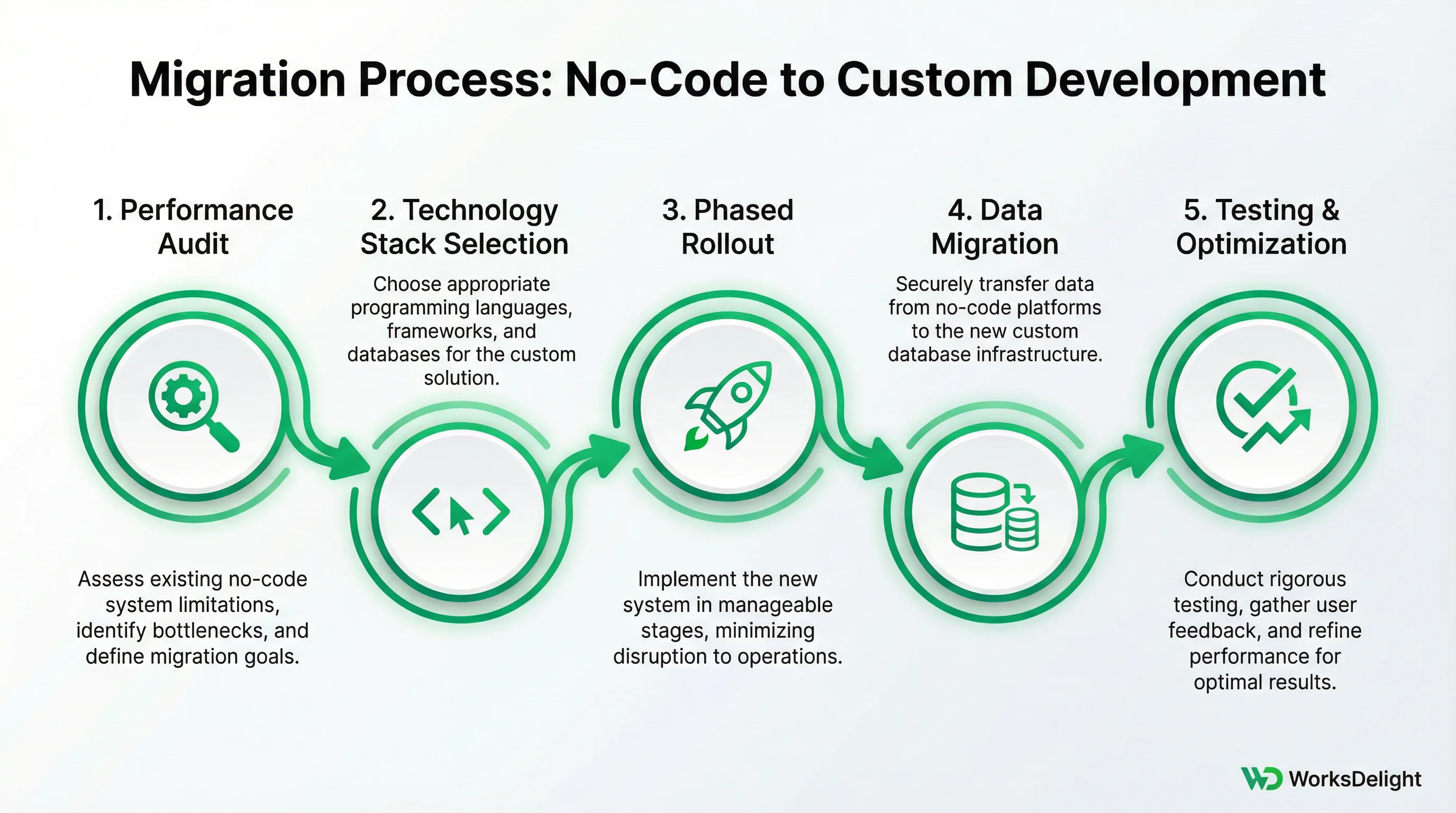
Transitioning from a no-code platform to a custom-built solution requires careful planning and execution. The migration process should be approached systematically to minimize disruption and maximize the benefits of the new architecture.
Step 1: Performance Audit
Conduct a thorough performance audit of your existing no-code application to identify key bottlenecks and areas for improvement. Use tools like Google PageSpeed Insights, GTmetrix, and WebPageTest to gather detailed performance metrics. Document specific issues such as slow database queries, large image files, or excessive JavaScript execution time.
Step 2: Technology Stack Selection
Choose the right technology stack for your custom application. For most modern web applications, a combination of React for the frontend and a scalable backend like Node.js or Python is an excellent choice. Consider factors such as your team's expertise, the specific requirements of your application, and the long-term maintainability of the chosen technologies. At WorksDelight, we specialize in React and Next.js development, ensuring your application is built with the latest performance optimization techniques.
Step 3: Phased Rollout
Plan a phased rollout of your new application to minimize disruption and risk. You might start by migrating a single feature or section of your site, and then gradually migrate the rest of the application over time. This approach allows you to test the new system in production with real users before committing to a full migration.
Step 4: Data Migration
Carefully plan and execute the migration of your data from your no-code platform to your new custom database. Ensure data integrity by implementing validation checks and running test migrations before the final cutover. Consider using ETL (Extract, Transform, Load) tools to automate the migration process and reduce the risk of errors.
Step 5: Testing and Optimization
Thoroughly test your new application to ensure that it is bug-free and performs as expected. Implement comprehensive unit tests, integration tests, and end-to-end tests to catch issues before they reach production. Continuously monitor and optimize its performance after launch using tools like New Relic, Datadog, or custom monitoring solutions.
Need Help with Your Migration?
Our team at WorksDelight has successfully migrated dozens of applications from no-code platforms to high-performance custom solutions. We handle everything from initial audit to final deployment.
- Free performance audit and migration roadmap
- Zero-downtime migration strategies
- Ongoing support and optimization
- Competitive rates at $30/hour
Is It Time to Make the Switch?
No-code platforms are an excellent choice for building prototypes, MVPs, and simple websites. However, for any business that is serious about growth, there will come a time when the limitations of no-code become a barrier to success. If you are experiencing performance issues, struggling with a lack of customization, or concerned about your ability to scale, it is time to consider a custom-built solution.
The decision to migrate from no-code to custom development is not just a technical one; it is a strategic business decision that can have a profound impact on your company's growth trajectory. By investing in a custom-built platform, you are investing in the long-term success and scalability of your business.
Conclusion
In the digital age, performance is paramount. While no-code platforms offer a tempting shortcut to launching a web application, they come with inherent performance limitations that can ultimately hinder growth. Custom development, on the other hand, provides the control, flexibility, and scalability needed to build a truly high-performance application that can keep pace with your business.
By making the strategic decision to invest in a custom-built solution, you are not just building a website; you are building a competitive advantage. The performance gains, scalability benefits, and complete control over your application's architecture will pay dividends for years to come.
At WorksDelight, we understand the challenges of transitioning from no-code to custom development. Our team of expert developers has the experience and expertise to guide you through every step of the process, from initial planning to final deployment and beyond. Contact us today to learn how we can help you unlock the full potential of your business with a high-performance custom application.